 FSNS
FSNS
 Ryan Welsh
If you work in food manufacturing, the push toward prevention should sound familiar. FDA’s FSMA framework and USDA’s HACCP requirements emphasize identifying and controlling hazards before they cause illness. The goal is to prevent outbreaks and catch problems early enough to act.
SQF Edition 10 takes another step in that direction by strengthening environmental monitoring requirements. For sites preparing to move from Edition 9, the practical question is what needs to change in their environmental monitoring program (EMP).
Our technical services team has been fielding plenty of questions:
- What do the SQF 10 EMP requirements mean for daily operations?
- What needs to be documented?
- What will auditors expect during your first Edition 10 audit?
We asked Ryan Welsh, Technical Services Specialist - Microbiology at FSNS, who works with food manufacturers on these challenges every day, to help explain the changes and how to put them into practice.
What Changes Under the SQF 10 EMP Requirements?
Edition 9 already required a risk-based EMP, a sampling schedule, and tracking and trending of results. Sites also had to act on unsatisfactory results or trends. These are continuing responsibilities.
The main changes in section 2.4.8 make the site’s assessment and its connection to day-to-day monitoring more explicit. Here is what to review.
| Change | What Your Site Should Review |
| Environmental monitoring becomes a Core Clause | Prioritize EMP gaps. Core Clause findings carry deductions of two points for a minor nonconformance and seven for a major. |
| Clause 2.4.8.1 becomes mandatory | Assess manufacturing processes and surrounding areas that could affect them to determine the level of monitoring needed. |
| Organism selection is tied to the site's hazard analysis | Document why the selected pathogens or indicators fit your products, processes, and environment. |
| Sampling plans gain detail | Specify when sampling occurs, such as pre-operational, during production, or post-operational, and define acceptance criteria. |
| Follow-up expectations become more explicit | Include root-cause analysis, corrections, and corrective and preventative actions for unsatisfactory results or trends. |
| EMP review is explicitly addressed | Evaluate the program annually and when trends or changes affect product safety. |
What Should an Environmental Monitoring Risk Assessment Cover?
Clause 2.4.8.1, which is a mandatory clause, explicitly says:
“A risk-based environmental assessment to determine the level of monitoring program needed shall be in place for all food manufacturing processes and immediate surrounding areas that impact manufacturing processes.”
Your assessment should explain how contamination could reach food and how monitoring will help evaluate the controls against it.
Walk the site with people who understand production, sanitation, maintenance, and food safety. Compare the written program with conditions during normal operations. Consider:
- Product exposure, especially after a lethality step and before packaging.
- Equipment niches, damaged surfaces, and areas that are difficult to clean.
- Moisture, condensate, drains, and other potential contamination sources.
- Movement of employees, forklifts, utensils, ingredients, and waste.
- Previous positives, recurring problem locations, and changes in results.
Welsh gives the example of equipment bolted to the floor with an inaccessible opening or crevice. The practical questions are whether that location could harbor contamination and whether it presents a route to food-contact surfaces or product. Those answers should influence monitoring and control decisions.
A wet, ready-to-eat processing area may warrant particular attention to Listeria. A dry processing environment may present Salmonella concerns. These examples help frame the assessment; organism selection still needs to reflect the site's specific hazards.
SQF provides a helpful Environmental Monitoring Guidance Document.
Our complimentary EMP eBook also offers guidance on designing and implementing your program.
Document your reasoning in a format your team can maintain. A useful assessment record connects each area or activity with its potential hazard, contamination route, existing controls, monitoring approach, and justification. Record who assessed it and when.
How Should the Assessment Shape your Sampling Plan?
Use the assessment to justify your sampling locations, organisms, sample numbers, timing, and frequency. Explain how the plan covers higher-risk locations and how other locations rotate into the schedule.
For example, a difficult-to-clean equipment base near exposed product may deserve closer attention than a remote area with no credible transfer route. Document why each location matters, including its proximity to food and relevant movement patterns.
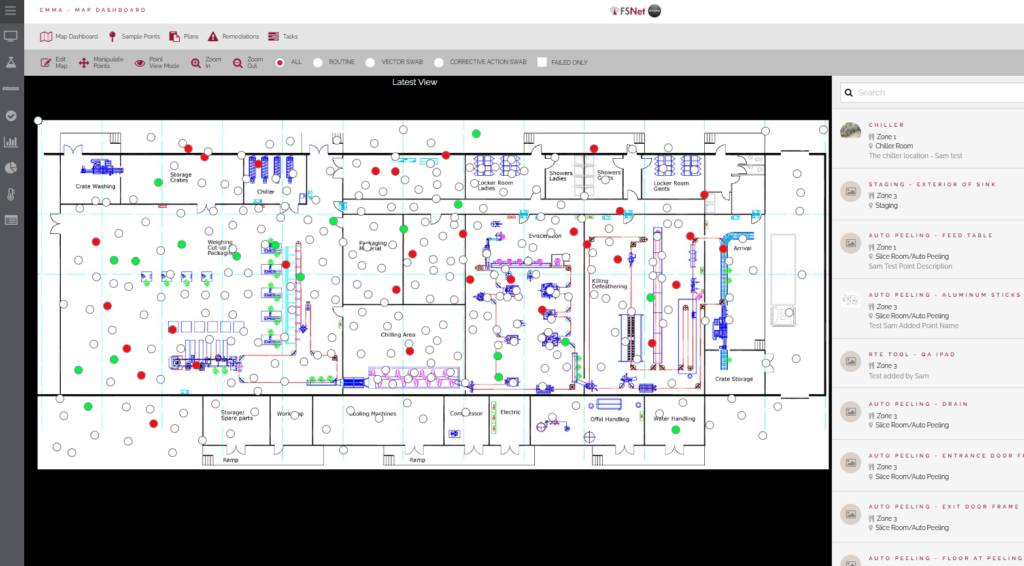
Welsh emphasizes knowing the actual sampling points. A map, a clear description, and a photo can help different employees consistently identify the intended surface.
Review acceptance criteria alongside your laboratory methods and response procedures. Employees should understand which findings require action, who receives the results, and what happens next. Sampling plans should also explain the purpose of sampling at different points in the production and sanitation cycle.
What Should Sites Do with Positives and Adverse Trends?
An investigation should establish why a problem occurred and whether the response addressed its source.
Under SQF Edition 9, many teams were just reacting to out-of-spec results. Under SQF 10, you will still need to respond to individual failures, but you also must examine all your data to discern trends.
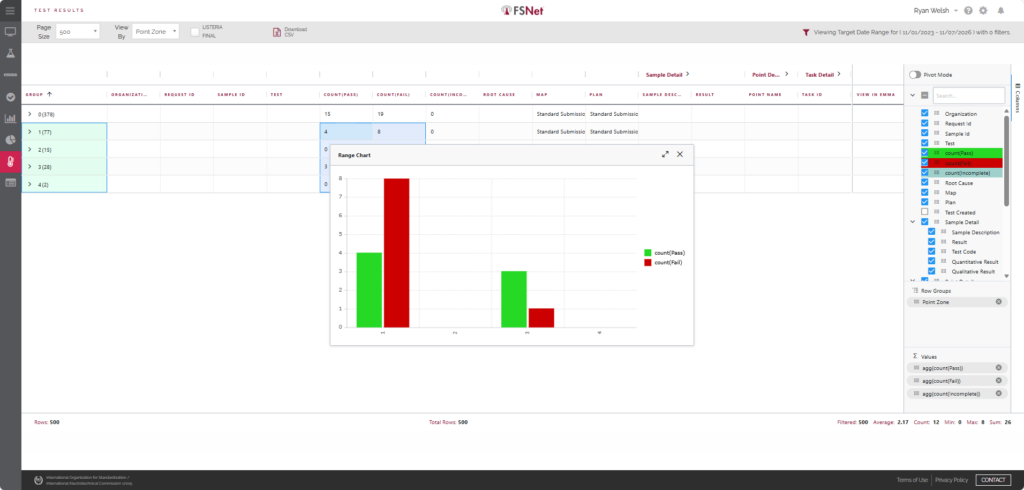
Repeated cleaning may leave an underlying equipment defect, sanitation gap, or contamination route unresolved. Review results across locations and dates to identify recurrence or related findings. Consider whether changes in sampling effort affect the apparent trend.
Document the immediate correction, investigation findings, corrective actions, and follow-up evidence. Where appropriate, use vector sampling around a positive location to help investigate the source and extent of contamination. Evaluate potential product implications under your established food safety procedures.
When Should You Update the EMP?
Edition 10 specifies annual evaluation and additional review when trends or changes affect product safety.
Build that review into change management. New equipment, altered traffic routes, construction, or a formulation change may affect the assessment. Record what you evaluated, the resulting decisions, and any updates to sampling or controls.
How Can emma® Help Support SQF 10 EMP Requirements?
Managing the supporting records becomes easier when sampling information, results, and follow-up actions are accessible together. FSNS' emma® Environmental Monitoring and Mapping Application helps sites organize that work.
With emma®, your team can:
- Map sampling points, attach photos, and assign risk designations.
- Manage sampling schedules and acceptance criteria.
- Filter results by location, zone, or date and review trends through analytics.
- Use risk-based corrective-action workflows and retain root-cause findings, supporting documents, and follow-up sampling records.
- Retrieve reports for program reviews, management, and auditors.
Your team remains responsible for the assessment and the decisions it supports. Emma helps make the program easier to manage and its records easier to review.
SQFI currently anticipates Edition 10 audits beginning January 2, 2027, contingent on GFSI benchmarking, with no earlier start. Use the preparation period to compare your EMP with the applicable Code and address gaps.
Visit our emma® page to watch the demo video and see how the platform works. You can also contact us there to request a personal demonstration.