
Challenge Studies for Food & Beverage Manufacturers

Lab+ performs challenge studies for food and beverage manufacturers that need product-specific data to make confident safety, quality, and commercialization decisions. Also called “inoculated pack studies”, these studies show how selected organisms behave in your product under defined conditions. 

Whether you are launching a new product, reformulating, reducing preservatives, changing packaging, or supporting a shelf-life decision, a challenge study provides data your FSQA, R&D, regulatory, and product development teams can use to make defensible decisions. 

Provide a few details about your product for a customized quote for your challenge study. 

Stylized white logo on black background featuring a circular badge with bold text above it.
Pixelated black-and-white illustration of the number 404, indicating a page not found error.
Icon of a location pin with a magnifying glass, signaling 'Find location' or 'Search location' functionality.

Collect Data that Answers Key Product Questions

Can this organism grow in my product?
Evaluate pathogen or spoilage organism growth, survival, or decline.
Will this reformulation affect risk?
Compare how formulation variables influence microbial behavior.
Can we support this shelf-life decision?
Generate product-specific data under defined storage conditions.
Will our rationale stand up to review?
Provide clear documentation for internal, customer, auditor, or regulatory review.

Why Lab+?

A food challenge study is far more complex than routine food microbiology testing. A useful study design requires sound scientific judgment, food-matrix experience, relevant organism selection, controlled conditions, and clear interpretation of results. Our team gives you…

Three blue outlined figures in business attire representing a team or group of colleagues.

A team of scientists (including multiple with Ph.D. degrees) that is solely dedicated to contract research work, including challenge studies.

Milestone badge icon showing '190+' in blue with a ribbon-shaped award outline on a black background, indicating a count or achievement.

190+ years of combined food safety testing experience working with a broad range of sample types.

Logo showing a blue map pin with the text '3 Lab+ Locations' indicating three locations.

3 Lab+ locations across the U.S. supporting specialized contract research studies.

Blue outline document with a checkmark and sparkles, symbolizing an approved or polished document

Clear, easy-to-understand final reports so your team can make defensible decisions.

What Is a Food Challenge Study?

A food challenge study is a controlled microbiological study that evaluates the growth, survival, or decline of selected organisms in a specific food product under defined conditions. 

Challenge studies are also called inoculated pack studies because organisms of interest are introduced into the product and monitored over time. The results help FSQA, R&D, and regulatory teams understand how the product’s formulation, packaging, processing, storage conditions, and intended shelf life affect microbial growth. 

A challenge study answers a vital question:

Can the organism of concern grow or survive in this product under the conditions that matter to our business?

When Do Food Manufacturers Need Challenge Studies?

Food manufacturers use challenge studies when routine testing, published data, or assumptions are not enough to answer a product-specific food safety question. 

A challenge study can help your team: 

    Smartphone with a magnifying glass focusing on a bug, symbolizing bug detection or debugging

    Understand whether a pathogen or spoilage organism can grow, survive, or decline in your product.

    Blue outline icon of a medicine bottle with pills and a connected molecular structure, representing pharmaceutical chemistry.

    Evaluate whether formulation, packaging, pH, water activity, antimicrobials, or storage conditions provide adequate control.

    Blue line illustration of a medicine bottle, a document with a clock, and three gears under a dividing line, representing pharmaceutical production and scheduling.

    Support shelf-life, date-code, reformulation, and product development decisions.

    Icon depicting a document and a bottle with sparkles, suggesting cleaning or a cleaning product.

    Generate documentation for customer, retailer, auditor, regulatory, or internal food safety review.

    Line drawing of a rocket with gears on both sides and a question-mark circle at the base, arrows pointing left and right.

    Reduce uncertainty before launch, scale-up, or commercialization.

    Common Triggers for a Challenge Study

    Trigger

    Ready-to-Eat Product
    Product Reformulation
    Spoilage Issue
    Cleaner-Label Development
    Packaging Change
    Storage or Shipping Change
    Shelf-Life or Date-Code Verification
    Customer, Auditor, Retailer, or Regulatory Request

    Question Your Team Needs to Answer

    Can a pathogen grow if the product has no consumer kill step?
    Did the change affect microbial control?
    What conditions may be allowing spoilage organisms to survive or grow?
    What happens if preservatives are reduced, removed, or replaced?
    Does vacuum packaging, modified atmosphere packaging, resealable packaging, or a new package size change microbial behavior?
    Does the product remain controlled under new refrigerated, frozen, ambient, or distribution conditions?
    Can the product support the intended shelf life under defined conditions?
    Do we have product-specific data to support our food safety rationale?

    Lab+ Challenge Study Capabilities

    Our Lab+ team can help design the study, select the organisms of interest, establish the right conditions, conduct microbial testing, and prepare a final report your team can understand and use.

    Pathogen Challenge Studies

    Listeria Challenge Studies for USDA Alternative Support

    FDA Food Code TCS Product Assessments

    Spoilage Organism Challenge Studies

    Antimicrobial Ingredient MIC Studies

    Best Used When…

    You need to understand whether a pathogen can grow, survive, or decline in your product under defined conditions.
    You manufacture certain ready-to-eat meat or poultry products and need data related to USDA Alternative 1 or Alternative 2 documentation.
    You need to determine whether a product should be treated as Time/Temperature Control for Safety food.
    You are investigating spoilage, reformulating a product, comparing prototypes, or evaluating microbial stability.
    You are comparing antimicrobial systems, adjusting preservative levels, or developing a cleaner-label formulation.

    What It Evaluates

    Listeria monocytogenes, Salmonella, pathogenic E. coli, and other organisms of concern in RTE, refrigerated, no-kill-step, or post-process-exposed products.
    Whether formulation, antimicrobial ingredients, post-lethality treatments, or related controls limit or suppress Listeria monocytogenes growth.
    Product characteristics such as pH, water activity, formulation, storage conditions, and microbial behavior.
    Growth, survival, or decline of spoilage organisms associated with quality defects in your product.
    How specific antimicrobial ingredients perform against target organisms of interest.

    Outcome for Your Team

    Supports product development, food safety plan decisions, shelf-life evaluations, and documentation for customers, retailers, regulators, or industry expectations.
    Helps support defensible documentation for Listeria control strategies in applicable RTE meat and poultry products.
    Helps manufacturers, retailers, and foodservice operators make informed decisions about handling, storage, and shelf-life expectations.
    Helps identify spoilage risks before they affect customers, reduce shelf life, trigger complaints, or damage brand confidence.
    Helps R&D teams choose formulation strategies with stronger data before scale-up, launch, or reformulation.

    Every Challenge Study Depends on the Product

    $

    Target organism

    $

    Product matrix

    $

    Salt / sugar level

    $

    Water activity

    $

    pH

    $

    Preservatives or antimicrobials

    $

    Packaging system

    $

    Storage temperature

    $

    Distribution conditions

    $

    Intended shelf life

    Types of Products for Food Challenge Studies

    Lab+ supports challenge studies across a range of food and beverage matrices. Contact us if you do not see your product type listed – our team can review your product and determine whether we can support the study.

    Product Category

    Ready-to-Eat and Refrigerated Foods
    Meat and Poultry Products
    Sauces, Dips, Dressings, and Condiments
    Dairy and Dairy Alternatives
    Bakery and Prepared Components
    Beverages
    Low-Water-Activity Products
    Complex or Reformulated Products

    Examples

    Deli items, prepared foods, refrigerated meals
    Cooked RTE meats, sliced products, marinated products, post-process-exposed products
    Acidified products, spreads, emulsions, dips, sauces
    Cheeses, cultured dairy, plant-based alternatives
    Room-temperature pastries, pies, doughs, intermediate products
    Juices, teas, functional beverages, dairy-based beverages
    Low-aw foods, dry blends, pet treats, snack products
    Multi-component foods, cleaner-label products, products using antimicrobial ingredients

    How the Challenge Study Process Works

    Tell Us About Your Product & Study Goals

    Our Lab+ Team Reviews the Product & Scope

    We Design a Product-Specific Study

    The Study is Performed Under Defined Conditions

    Your Receive a Final Report

    Find a Food Challenge Study Testing Lab Near You

    FSNS partners with Certified Laboratories, our fellow Certified Group company, to operate food testing labs across North America, including three Lab+ locations dedicated to performing food challenge studies, shelf life testing, and other contract research work.
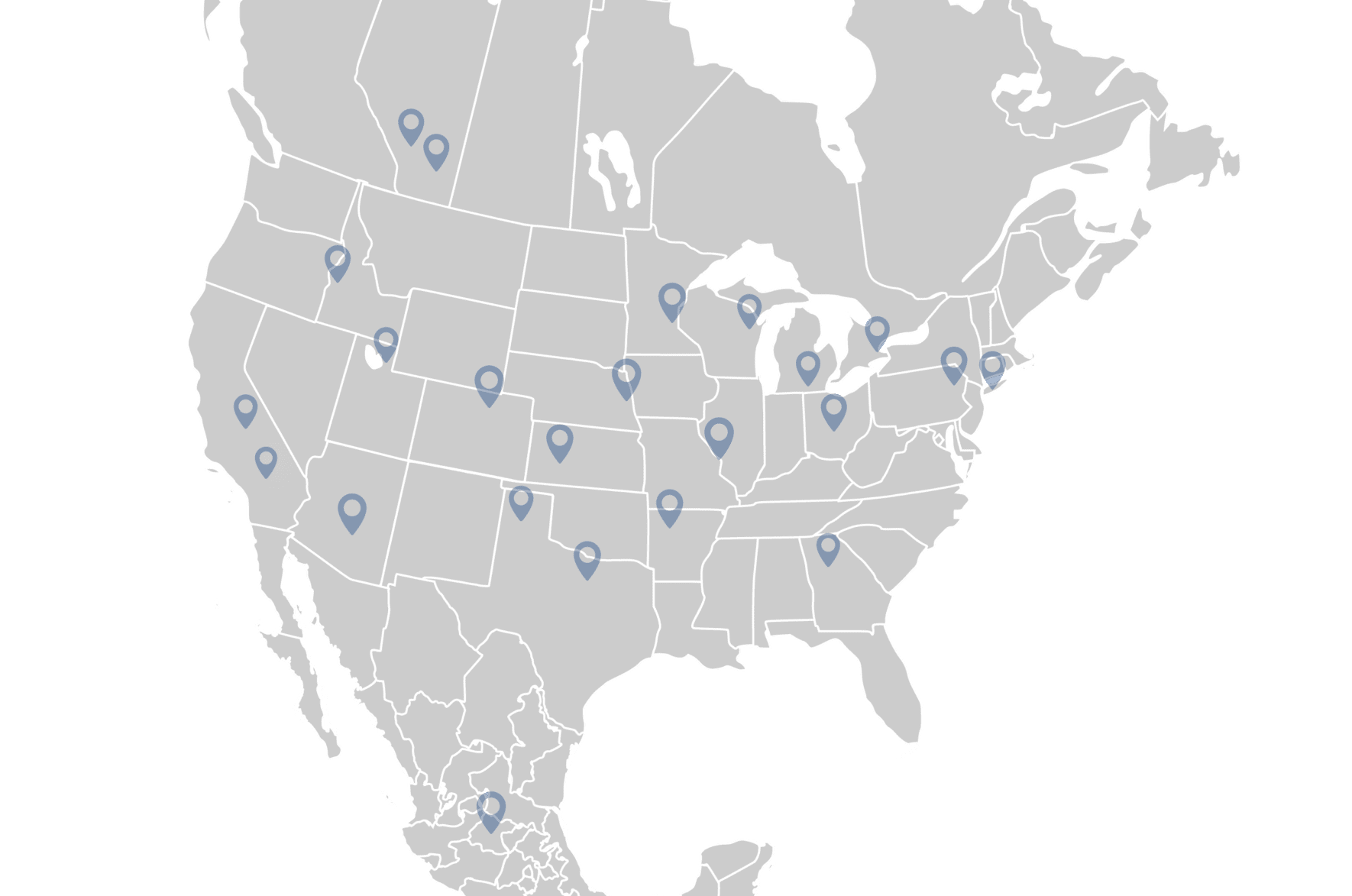
    Turlock, CA

    San Antonio, TX

    Aurora, IL

    What Does
    190+ Years
    of Combined Experience Look Like?

    Our team has 190+ years of combined experience with food testing, including challenge studies for food safety. Our scientists use their food safety experience to help select relevant organisms, define appropriate study conditions, choose meaningful timepoints, interpret results, and prepare a report your team can use.

    Alex Brandt FSNS

    Alex Brandt, Ph.D.

    Chief Science Officer, Microbiology
    11 yrs. 

    Ben Howard Certified Group

    Leslie Thompson-Strehlow, Ph.D.

    Lab+ General Manager
    25 yrs.

    Wayne Muraoka, Ph.D., FSNS

    Wayne Muraoka, Ph.D.

    Director of Research
    17 yrs.

    Isaac Boateng, Ph.D., FSNS

    Isaac Boateng, Ph.D.

    Research Scientist
    2 yrs.

    Jihun Kang, Ph.D., FSNS Lab+

    Jihun Kang, Ph.D.

    Research Scientist
    9 yrs. 

    Egle Karklis, M.S., FSNS Lab+

    Egle Karklis, Ph.D.

    Research Scientist
    1 yr.

    Rebecca Linker, B.S., FSNS Lab+

    Rebecca Linker, B.S.

    Contract Research
    Study Coordinator
    8 yrs.

    Sherman Mah, B.S., FSNS Lab Plus

    Sherman Mah, B.S.

    Senior Manager Technical Services/Process Authority
    30 yrs. 

    Wendy Reid, B.S., FSNS Lab+

    Wendy Reid, B.S.

    Senior Research Operations Manager
    36 yrs. 

    Vicki Gharibian, B.S., FSNS Lab Plus

    Vicki Gharibian, B.S.

    Senior Research Operations Manager
    26 yrs. 

    Ryan Welsh, M.S., FSNS shelf life studies for food

    Ryan Welsh, M.S.

    Technical Services Specialist
    15 yrs. 

    Daniela Chavez, Ph.D., FSNS research scientist for food shelf life testing and studies

    Daniela Chavez, Ph.D.

    Research Scientist
    1 yr. 

    Nathan Kilgore, Ph.D., FSNS Lab Plus scientist for shelf life testing of food products.

    Nathan Kilgore, Ph.D.

    Research Coordinator
    1 yr. 

    Aaron Pleitner, Ph.D., microbiologist

    Aaron Pleitner, Ph.D.

    Director of Microbiology Technical Services
    10 yrs. 

    Complete Our Food Challenge Study Questionnaire

    Provide a few details about your product, packaging, organisms of interest, storage conditions, and study needs. Our team will evaluate your request and reach out with a customized quote.

    New call-to-action

    Challenge Studies for Food FAQs

    What is a challenge study in food safety?
    A challenge study is a microbiological study that evaluates how selected organisms behave in a specific food product under defined conditions. The study may assess whether pathogens or spoilage organisms grow, survive, decline, or are inhibited over time. For more, see our
    Why do food manufacturers perform challenge studies?
    Food manufacturers perform challenge studies to obtain product-specific data about microbial growth, survival, or inhibition. Common reasons include launching a new product, reformulating, reducing preservatives, changing packaging, extending shelf life, responding to customer requests, or evaluating whether a product supports pathogen growth.
    What is an inoculated pack study?
    An inoculated pack study is another name for a challenge study. In this type of study, selected organisms are introduced into a product and monitored over time under defined storage, packaging, or handling conditions.
    What organisms can be used in a food challenge study?
    The organisms depend on the product, hazard analysis, study objective, and regulatory or customer need. Challenge studies may use pathogens such as Listeria monocytogenes, Salmonella, or pathogenic E. coli; or spoilage organisms associated with quality issues in the product.
    What product factors affect challenge study design?
    Challenge study design may consider pH, water activity, formulation, salt, sugar, preservatives, antimicrobial ingredients, packaging system, storage temperature, distribution conditions, intended shelf life, and the organism of interest.
    Can a challenge study support shelf-life decisions?
    Yes. A challenge study can support shelf-life decisions when the question involves pathogen growth, pathogen survival, spoilage risk, or microbial control over time. Shelf-life testing and challenge studies are related, but they answer different questions and may be used together depending on the product and risk.
    Can a challenge study help with clean-label reformulation?
    Yes. A challenge study can help evaluate whether a cleaner-label formulation, preservative reduction, or antimicrobial ingredient change affects microbial control. This is useful when a manufacturer wants to reduce or replace preservatives without relying on assumptions about product safety or quality.