Antioxidants can help preserve flavor, aroma, color, nutritional quality, and shelf life in lipid-containing foods. But adding an antioxidant to a formulation does not prove that the finished product is adequately protected.
For food manufacturers, antioxidants lab testing can answer several different questions:
- Is the intended antioxidant present?
- Is it present at the expected concentration?
- Is lipid oxidation occurring anyway?
- Does protection persist through the intended shelf life?
- Does the formulation remain appropriate for the markets where the product will be sold?
Those questions require more than one analytical result. Targeted antioxidant testing can verify identity and concentration, while lipid oxidation testing, oxidative stability testing, shelf life studies, and sensory evaluation help determine whether the antioxidant system is actually protecting the product.
In this on-demand webinar, Certified Group scientists explain the chemistry behind oxidative rancidity, demonstrate a newly developed HPLC method for nine antioxidants, and show how manufacturers can combine antioxidant analysis with oxidation measurements and shelf-life data to support formulation, quality, troubleshooting, and compliance decisions.
Antioxidants Lab Testing Webinar Presenters
- Alex Brandt, Ph.D., Chief Science Officer
- Kevin Schmitt, Ph.D., Chemistry Technical Services Specialist
- Justin Allen, M.S., Senior Lab Analyst
- Jay Alappat, Ph.D., Chief Science Officer-Chemistry
Watch the webinar recording and read the edited transcript-based article below.
What Can Antioxidants Lab Testing Tell Food Manufacturers?
The central question is not simply whether an antioxidant is present. The more useful question is whether the antioxidant system is providing meaningful protection under the product’s actual processing, packaging, distribution, and storage conditions.
A targeted antioxidants lab test can establish antioxidant identity and concentration. That information can support formulation verification and show whether the concentration changes during storage.
But antioxidant concentration alone does not measure the consequence of oxidation. A manufacturer may confirm that the expected antioxidant is present and still see rancid flavors, color changes, nutrient degradation, or premature shelf-life failure.
That is why we recommend pairing targeted antioxidant measurement with tests that show what is happening to the product itself.
What Causes Oxidative Rancidity in Foods?
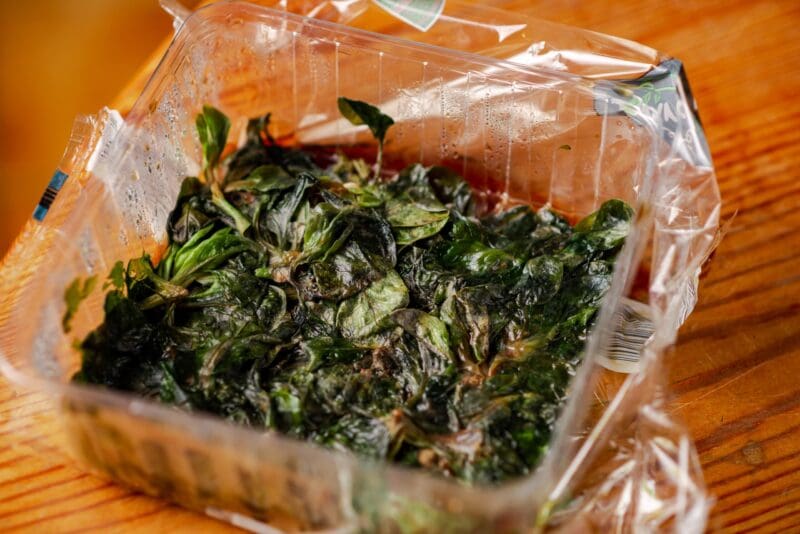
Rancidity is the deterioration of fats, oils, and lipid-containing foods that can produce undesirable changes in flavor, aroma, appearance, and other quality attributes.
There are two broad pathways.
Oxidative rancidity occurs when susceptible lipids react with oxygen. Unsaturated fatty acids can form lipid radicals, which react with oxygen to form lipid peroxyl radicals. Those radicals can then react with other lipid molecules, producing lipid hydroperoxides and continuing a chain reaction.
Hydrolytic rancidity occurs when fats are broken down through hydrolysis, releasing free fatty acids. Depending on the fatty acids involved, the result can also include strong odors and flavors.
Both processes can occur in the same food, but they do not necessarily respond to the same control measures.
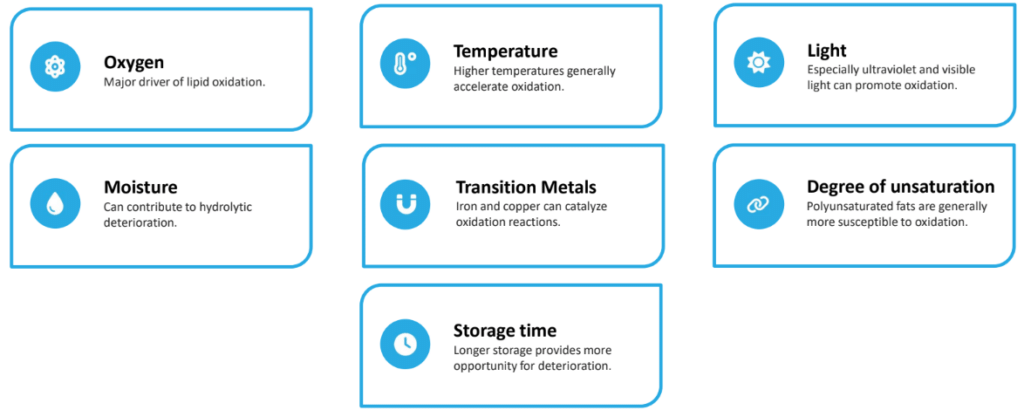
Oxidation is strongly affected by the product environment. Important factors include:
- Oxygen exposure
- Temperature
- Light
- Moisture and water activity
- Transition metals such as iron and copper
- The degree of unsaturation in the lipid system
- Storage time
These factors can interact. A highly unsaturated product exposed to residual oxygen, catalytic metals, light, and elevated temperature may deteriorate much faster than a product in which only one of those conditions is present.
How Does Lipid Oxidation Affect Food Quality and Shelf Life?
The most immediate effect is often sensory.
Secondary oxidation products can include aldehydes, ketones, alcohols, hydrocarbons, and carboxylic acids. Some have very low sensory thresholds, so stale, cardboard-like, paint-like, or other oxidized notes may become noticeable even when the total amount of oxidation products is relatively small.
Oxidation can also affect appearance, physical properties, unsaturated fatty acids, and oxidation-sensitive nutrients.
We always like to make important distinction between quality and food safety with customers.
Rancidity does not automatically mean a product has become acutely unsafe. For many commercial foods, the immediate issue is that the product no longer meets its intended sensory or shelf-life target.
For a manufacturer, that can still represent product failure. If oxidized flavor develops before the labeled or intended shelf life, the formulation, processing, packaging, or storage system may need to be reconsidered.
How Do Antioxidants Protect Foods From Oxidation?
Antioxidants can interfere with lipid oxidation through several mechanisms.
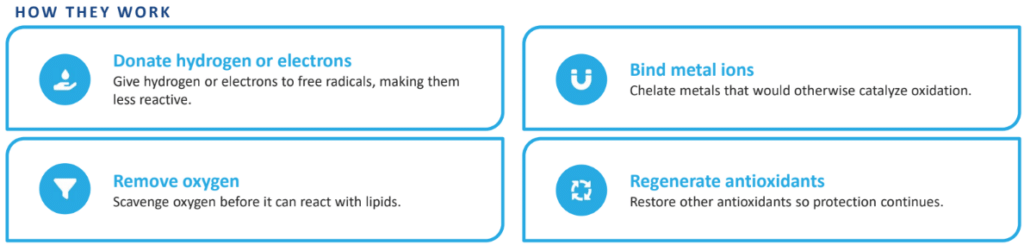
Chain-breaking antioxidants can donate hydrogen to reactive radicals, converting them to less-reactive species and interrupting propagation.
Other components can bind or chelate metals such as iron and copper, reducing their ability to catalyze reactions that accelerate hydroperoxide decomposition.
Manufacturers can also reduce initiation pathways through oxygen control, light protection, packaging choices, temperature control, and other process interventions.
The key point is that antioxidant performance is matrix dependent. Polarity, partitioning behavior, concentration, ingredient interactions, oxygen availability, metal concentrations, processing history, and packaging can all affect performance.
For that reason, the most useful formulation question is not “What is the strongest antioxidant?” It is “What combination of interventions provides the best oxidative stability in this food system?”
Why Doesn’t Antioxidant Concentration Alone Prove a Product Is Protected?
Two products can contain the same measured concentration of an antioxidant and perform very differently.
One may remain stable while another develops rancidity earlier because the two products differ in:
- Lipid composition
- Oxygen exposure
- Light exposure
- Temperature
- Metal content
- Processing
- Packaging
- Other characteristics of the matrix
Antioxidants may also be consumed or degraded during processing and storage, and interactions with other ingredients may enhance or reduce protection.
A targeted antioxidant result therefore answers an important but limited question: What is present, and how much is present?
To understand whether the system is working, the manufacturer also needs evidence of the product’s oxidation status and, when shelf life is the concern, how that status changes over time.
How Can Targeted Antioxidant Testing Be Combined With Oxidation Testing?
We recommend that our customers measure both the antioxidant and the consequence.
Targeted antioxidant analysis can provide:
- Antioxidant identity
- Antioxidant concentration
- Formulation verification
- Changes in antioxidant concentration during storage
Oxidation testing can then provide evidence of what is happening to the food.
Peroxide value is used to assess primary oxidation products.
p-Anisidine value is used to evaluate secondary oxidation products.
TOTOX combines primary and secondary oxidation information to provide a broader view of oxidative status.
TBARS can be used to measure products associated with lipid oxidation.
Depending on the product and the question, other useful tools include conjugated measurements, targeted volatile analysis, accelerated stability testing, fatty-acid profiling, moisture or water-activity measurements, and sensory evaluation.
The appropriate combination depends on the matrix and the decision the manufacturer needs to make.
How Does HPLC Antioxidant Testing Work?
Certified Group developed an HPLC-UV approach based on AOAC 983.15 to identify and quantify nine antioxidants in a single analytical workflow.
For the extraction, our laboratory weighs a 1 g sample, adds 10 mL of extraction solvent, and uses a 25 ppm matrix spike during method evaluation. The sample is processed with a GenoGrinder for 10 minutes, centrifuged, filtered, and transferred to a vial for instrumental analysis.
The HPLC method uses:
- A mobile phase of 5% acetic acid in water
- A second mobile phase of 50:50 acetonitrile:methanol
- A 20 µL injection
- A 15-minute run time
- UV detection at 280 nm
- A six-point calibration curve from 0.5 to 125 ppm
- A 5 ppm quality-control point
The resulting chromatogram separates the nine antioxidant compounds so they can be identified and quantified.
Which Antioxidants Can Be Measured With the HPLC Method?
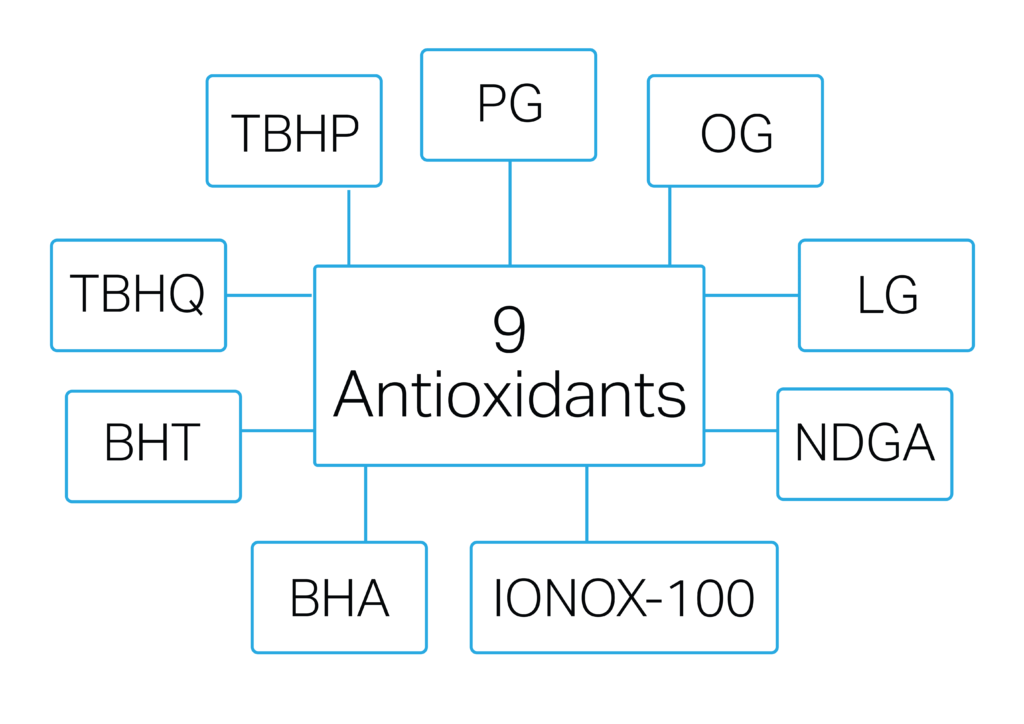
Our antioxidant lab testing method covers nine antioxidant compounds:
- Propyl gallate (PG)
- Octyl gallate (OG)
- Lauryl gallate (LG)
- Nordihydroguaiaretic acid (NDGA)
- IONOX-100
- Butylated hydroxyanisole (BHA)
- Butylated hydroxytoluene (BHT)
- Tertiary butylhydroquinone (TBHQ)
- 2,4,5-trihydroxybutyrophenone (THBP)
These compounds have been used in different fat- and oil-containing food applications. The appropriate antioxidant and allowable use depend on the food, formulation, intended market, and applicable regulatory requirements.
How Was Our Antioxidant HPLC Method Evaluated Across Food Matrices?
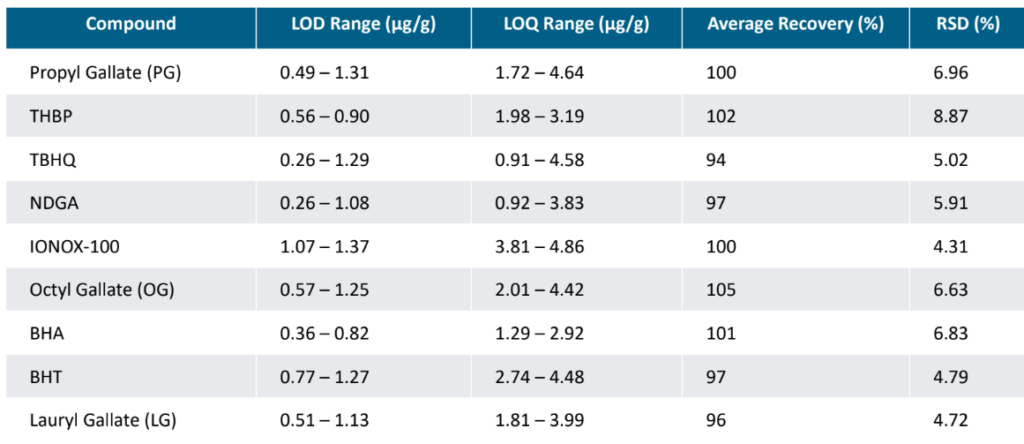
Our laboratory evaluated the method using three distinct matrices: shrimp, soy sauce, and red pepper spice.
The purpose was to challenge the method across different types of complex food matrices and assess its ruggedness.
Across the nine compounds, our data show:
- Limits of detection ranging approximately from 0.26 to 1.37 µg/g
- Limits of quantitation ranging approximately from 0.91 to 4.86 µg/g
- Average recoveries from 94% to 105%
- Relative standard deviations below 10%
Based on this work, our laboratory can report the nine antioxidants at a comfortable 10 ppm level, with an extraction designed to support relatively high sample volume.
How Should Food Manufacturers Choose the Right Oxidation Tests?
Start with the question that needs to be answered.
If the question is formulation, targeted antioxidant analysis can help confirm whether the intended antioxidant was added and whether the target concentration was achieved.
If the question is quality, peroxide value, p-anisidine, TOTOX, TBARS, or other oxidation measurements may help determine whether deterioration is occurring.
If the question is stability, manufacturers can trend antioxidant concentration and oxidation chemistry through a shelf-life or stability study.
If the question is regulatory, analytical concentration data must be interpreted in the context of the applicable food category, use conditions, and target market.
This question-first approach prevents manufacturers from ordering an isolated test that does not answer the underlying business or scientific problem.
Our technical team can help you determine the best testing program for your samples, so contact us with questions.
How Can Antioxidants Lab Testing Support Shelf-Life Studies?
Antioxidants lab testing becomes more useful when the results are trended over time rather than treated as a single snapshot.
A shelf-life program can track whether the antioxidant concentration declines during storage and whether primary or secondary oxidation products increase at the same time. Sensory observations can then be compared with the chemistry to determine when a meaningful quality change becomes detectable.
This can help answer questions such as:
- Is antioxidant protection maintained throughout the intended shelf life?
- When do oxidation indicators begin to change?
- Does sensory deterioration correspond with measurable oxidation chemistry?
- Is a packaging, processing, ingredient, or supplier change affecting stability?
- Does a reformulation improve oxidative stability?
Because oxidation is affected by the entire product system, the most useful shelf-life program may combine analytical chemistry with packaging conditions, storage temperature, water activity, texture, and sensory observations.
How Do Regulatory Requirements Affect Antioxidant Testing?
Antioxidant use is not governed by one universal concentration limit.
The applicable conditions can vary by antioxidant, food category, use, and market. For example, U.S. FDA requirements differ from the European Union, India, and other jurisdictions, which you must understand depending on the markets where you intend to sell the products. Here are FDA antioxidant limits for some food matrices:
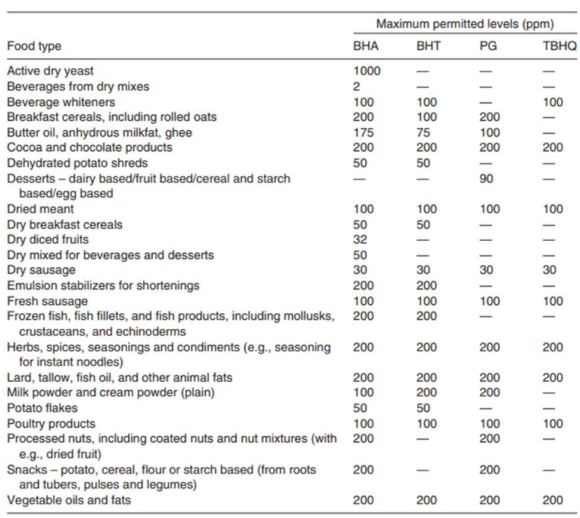
There’s also increased regulatory scrutiny around some food additives, such as BPA, meaning that analytical concentration data can become useful not only for current compliance decisions, but also for evaluating formulations when requirements are reassessed or changed.
For manufacturers selling into multiple markets, the testing strategy should therefore begin with a regulatory question: Where will this product be sold, and what requirements apply to this antioxidant in this food?
How Can Analytical Results Support Product Decisions?
Look at the antioxidants in your formulation as a four-part system:
Antioxidant identity and concentration + oxidation indicators + shelf-life or stability information + regulatory context.
Results can then support scientific interpretation of what is happening and why.
For manufacturers, the output is not simply a laboratory number. It can support decisions such as:
- Reformulate the antioxidant system
- Change an ingredient or supplier
- Modify processing conditions
- Improve packaging or oxygen control
- Investigate a sensory-quality failure
- Substantiate or reassess shelf life
- Prepare for changing regulatory requirements
The best antioxidants lab testing strategy is therefore one designed around the decision you need to make.
How Can Certified Group Help Build an Antioxidant Testing Strategy?
Certified Group can support targeted antioxidant analysis, oxidation testing, shelf-life and stability studies, method development, and regulatory consulting for food manufacturers evaluating antioxidant systems and oxidative quality.
If you are troubleshooting rancidity, verifying an antioxidant formulation, comparing packaging or ingredient changes, or designing a shelf-life program, contact us to discuss the product, matrix, intended market, and questions you need the data to answer.